Game UI Design

UX Designer
Self-initiated / Game UI Concept
Figma
3 Weeks
This project explores how RPG menus can feel like a natural part of the game instead of something that pulls players out of the experience.The goal was to make navigation fast and intuitive while still matching the dark fantasy tone of the world.
Traditional RPG menus often feel disconnected and cluttered, breaking player immersion before the adventure begins. The challenge was to create a functional menu that seamlessly extended the game's dark fantasy atmosphere.
The main challenge was to create a menu that functioned well with both mouse/keyboard and controller inputs. I addressed this by using a flexible grid layout with clear visual cues and testing the design across all.
Looked at how players interact with RPG menus and what they expect.
Methods
• Reviewed popular RPGs like The Witcher 3
• Surveyed 25 players
Key findings
• Players want quick access to core actions like Continue and Settings
• Too many options upfront makes things feel overwhelming
•Controller-friendly navigation is important, especially for console play

Explored different layouts to test hierarchy and navigation before landing on the final structure.
Version 1

Version 2


Designed a clean, focused menu that highlights the most important actions while keeping a cinematic feel.

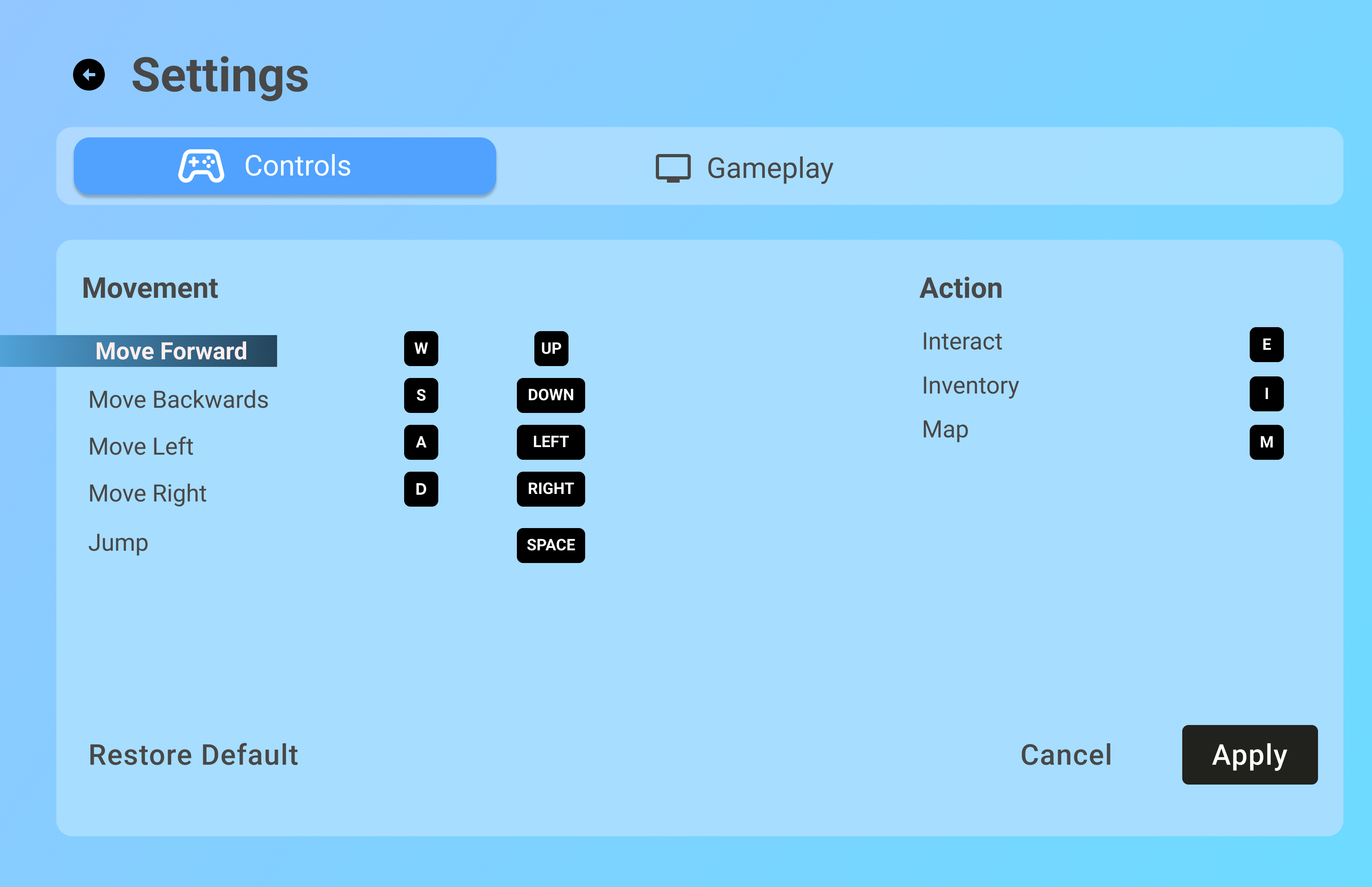
Grouped related controls together and added clearer visual structure.
Result
• Easier to navigate
• Less confusion when changing settings

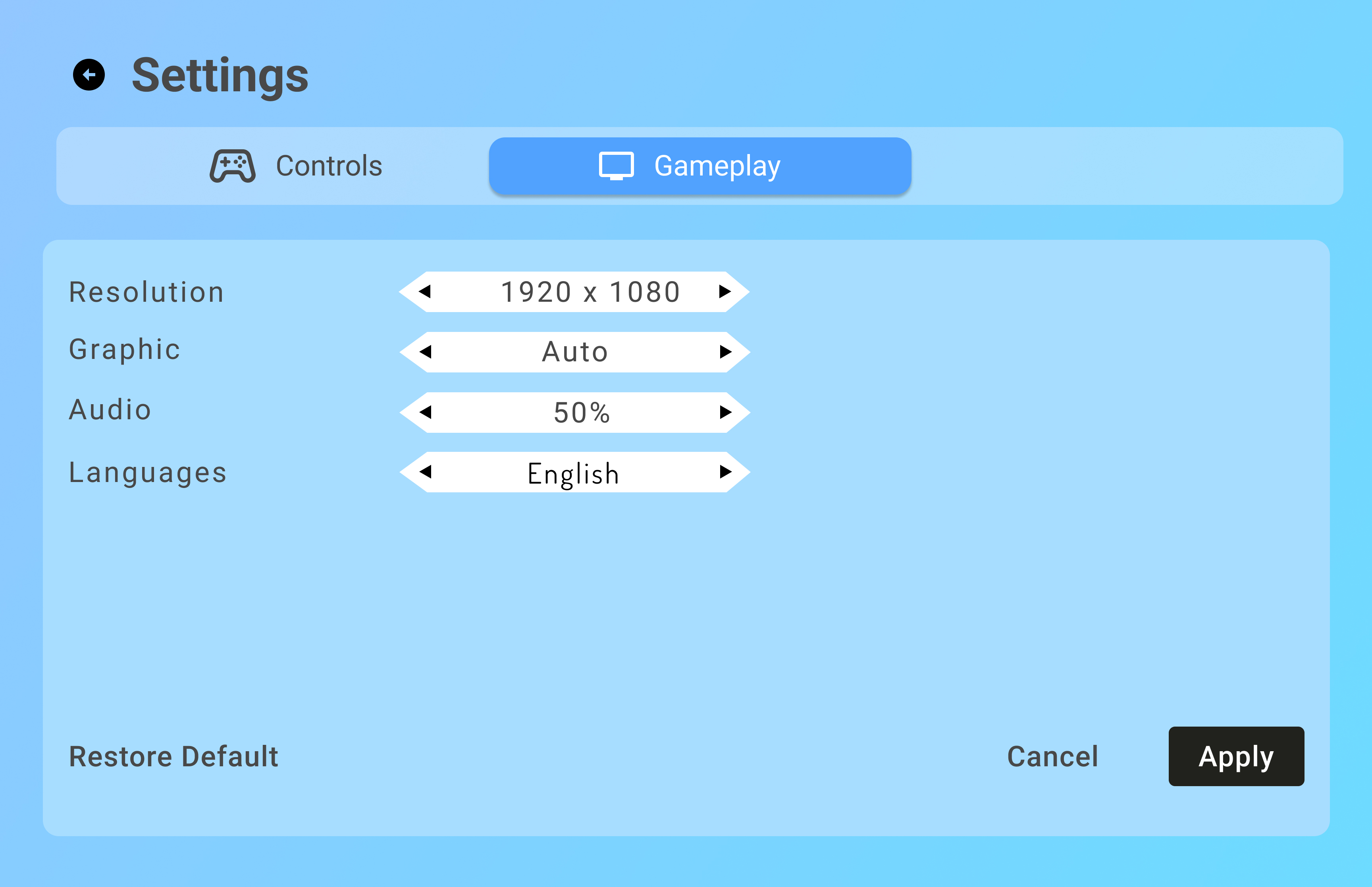
Used the same structure as controls to keep everything consistent.
Result
• Faster to scan
• Less effort to find options

• Focused on fewer, more important options instead of showing everything at once
• Chose clarity over feature density
• Kept the design simple to avoid overcomplicating the experience
The final design makes it easier to navigate menus without breaking immersion.Players can move through options quickly, while the UI still feels like part of the game world.
• Menus should feel like part of the game, not separate from it
• Simplicity makes a bigger impact than adding more features
• Designing for different inputs requires thoughtful structure


.png)