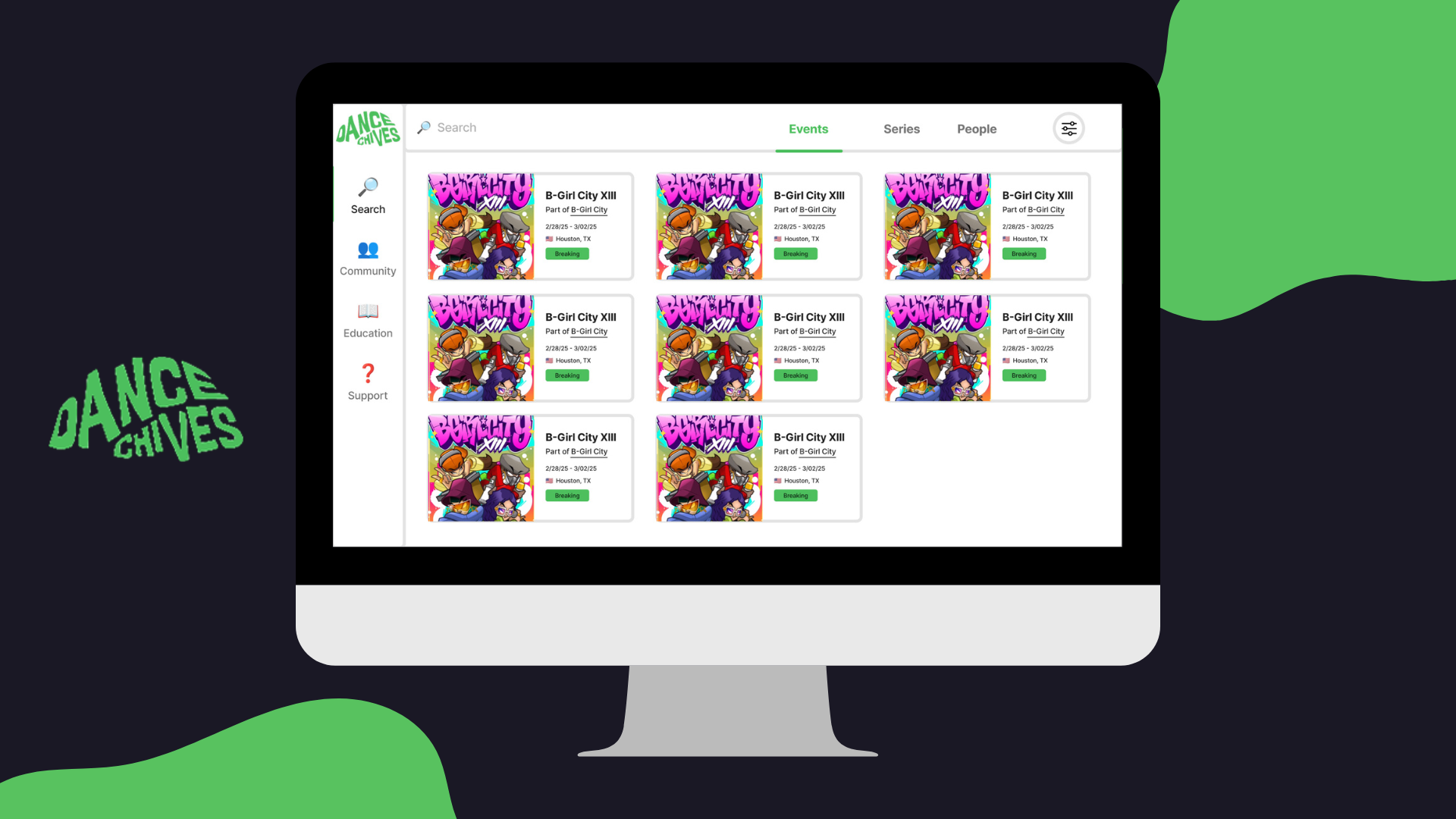
Final Product
Founder, Engineer, Copy Writer , and 2 UX/UI Designers
Figma, Blender
2 months
Dance Chive is a web platform that centralizes dance battle content including events, participants, and media into a structured and searchable system.
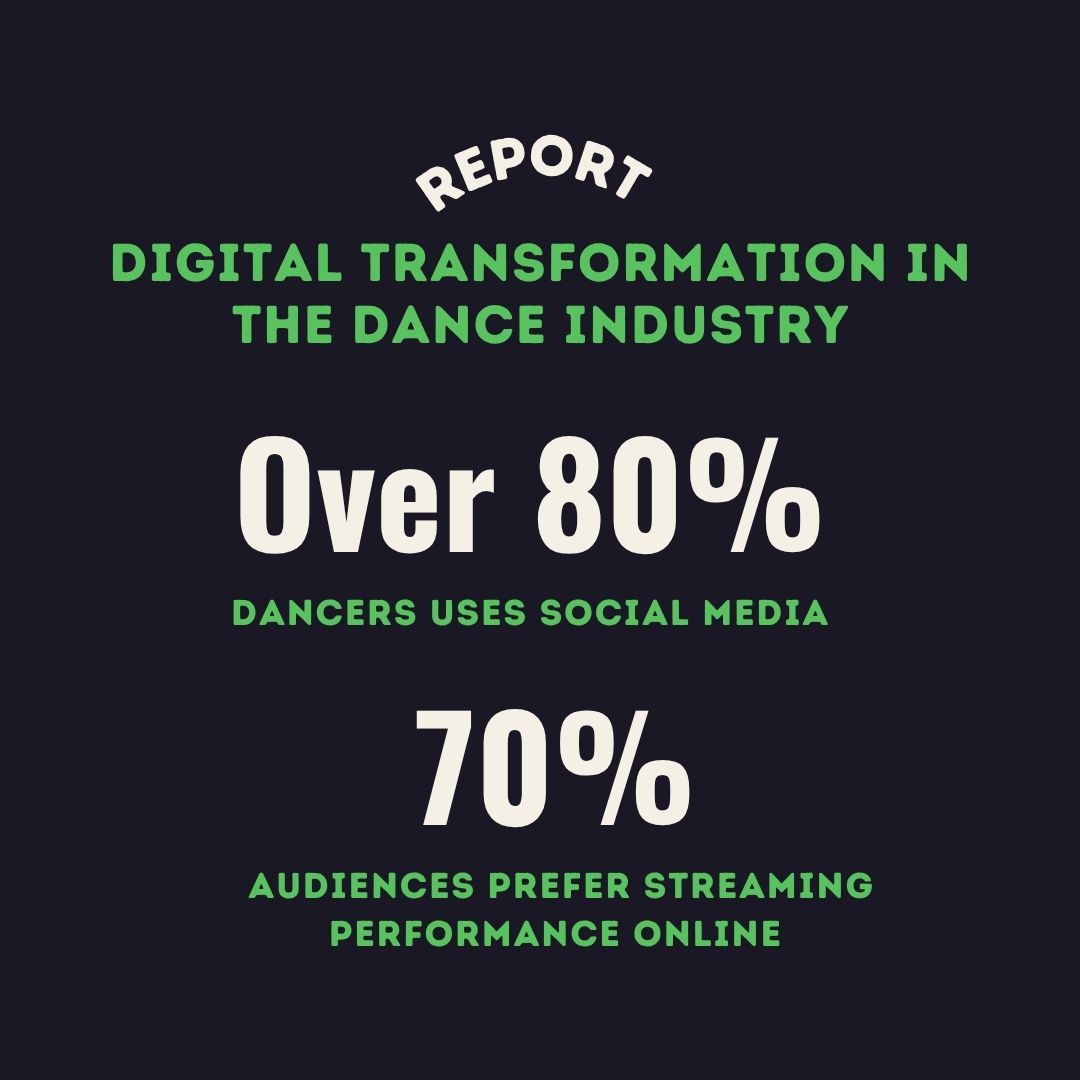
Dance battles are widely shared across platforms like YouTube and Instagram, but the content is fragmented and unstructured.This creates three core issues:
• Low discoverability since users rely on manual search across platforms
• No event level context because battles, dancers, and results are disconnected
• Limited recognition as dancers and organizers lack centralized visibility
Create a structured ecosystem for dance content where:
• Events, dancers, and battles are interconnected
• Users can navigate content through relationships instead of just search
• The community gains long term archival value
• Needed to support flexible, user-generated content
• Tagging and categorization had to scale across diverse content types
• Balance between structure and creative freedomNo reliance on platform-specific algorithms (unlike social media feeds)
I focused on designing a scalable content system, not just individual pages.
This meant:
• Defining how events, dancers, battles, and media relate
• Creating a metadata and tagging framework
• Designing navigation that supports both exploration and direct search
We interviewed dancers, DJs, MCs, and organizers to understand real workflows.
Key findings
Dancers want ownership of their history and the ability to track battles and build identity
Organizers need long term archives instead of short term promotion
Users prefer event based browsing over random video discovery.
Dance Community Member: "As a dance community member, I want to easily watch all the battles from an event, so that I don't have to search YouTube for them."
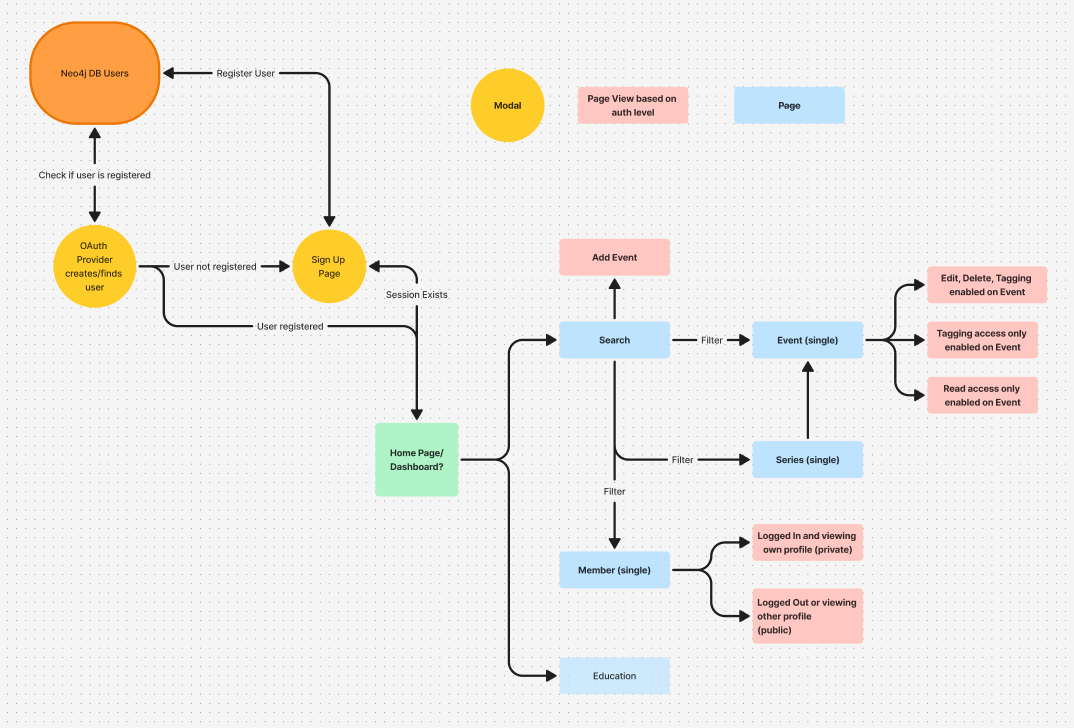
We use the site map to understand how users navigate the site and interact with events, dancers, and videos.
The search engine lets users quickly find events, battles, dancers, or dance styles using the site’s organized metadata and tagging system.

1. Structured event pages
Created dedicated event pages with clear metadata to make events easier to find and revisit
2. Tagging system
Added tags for dancers, styles, locations, and events to improve filtering and search
3. Creator profiles
Connected dancers and organizers to their work to give content more context and visibility4. Discovery over feeds
Moved away from infinite scrolling and focused on structured exploration for more intentional browsing
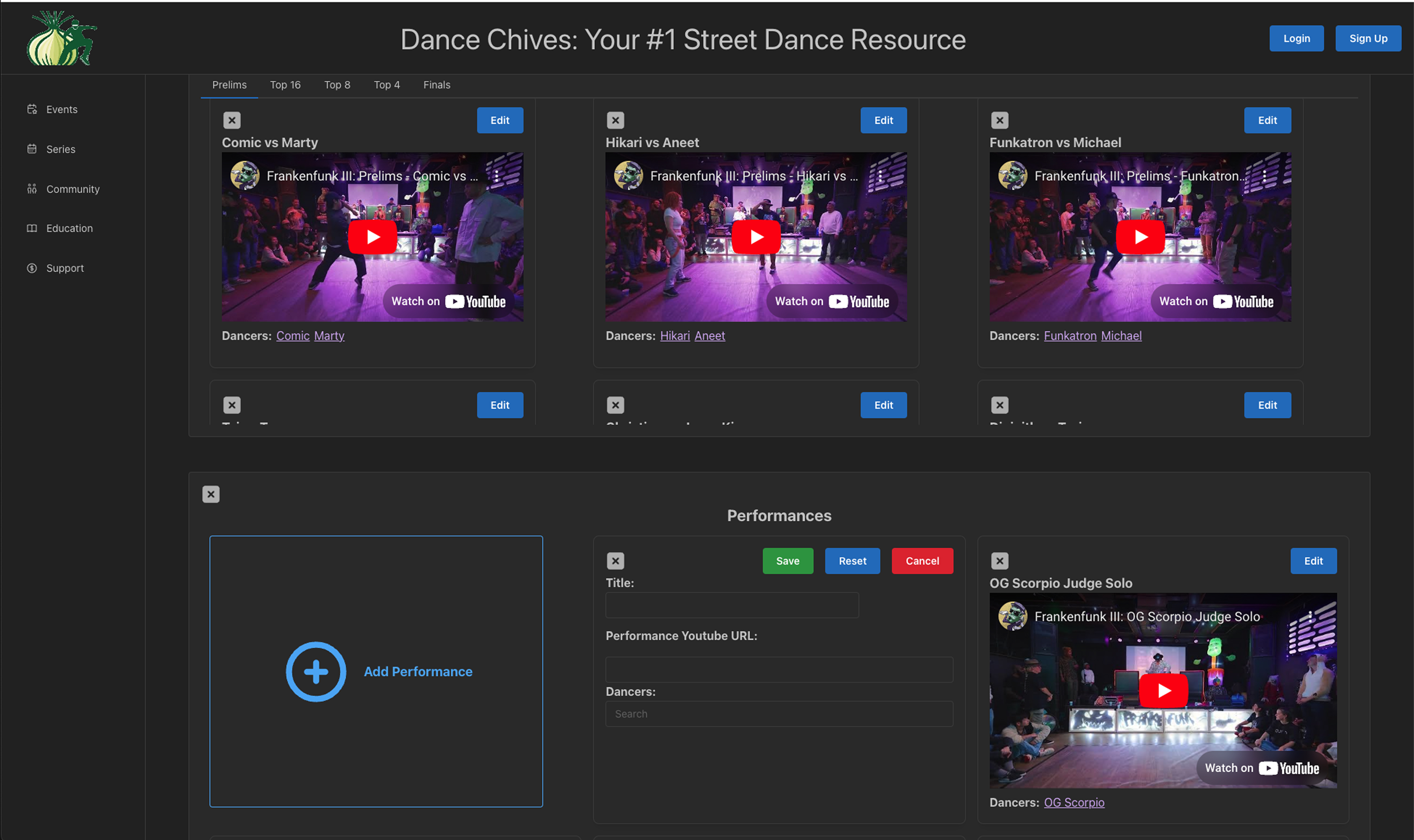
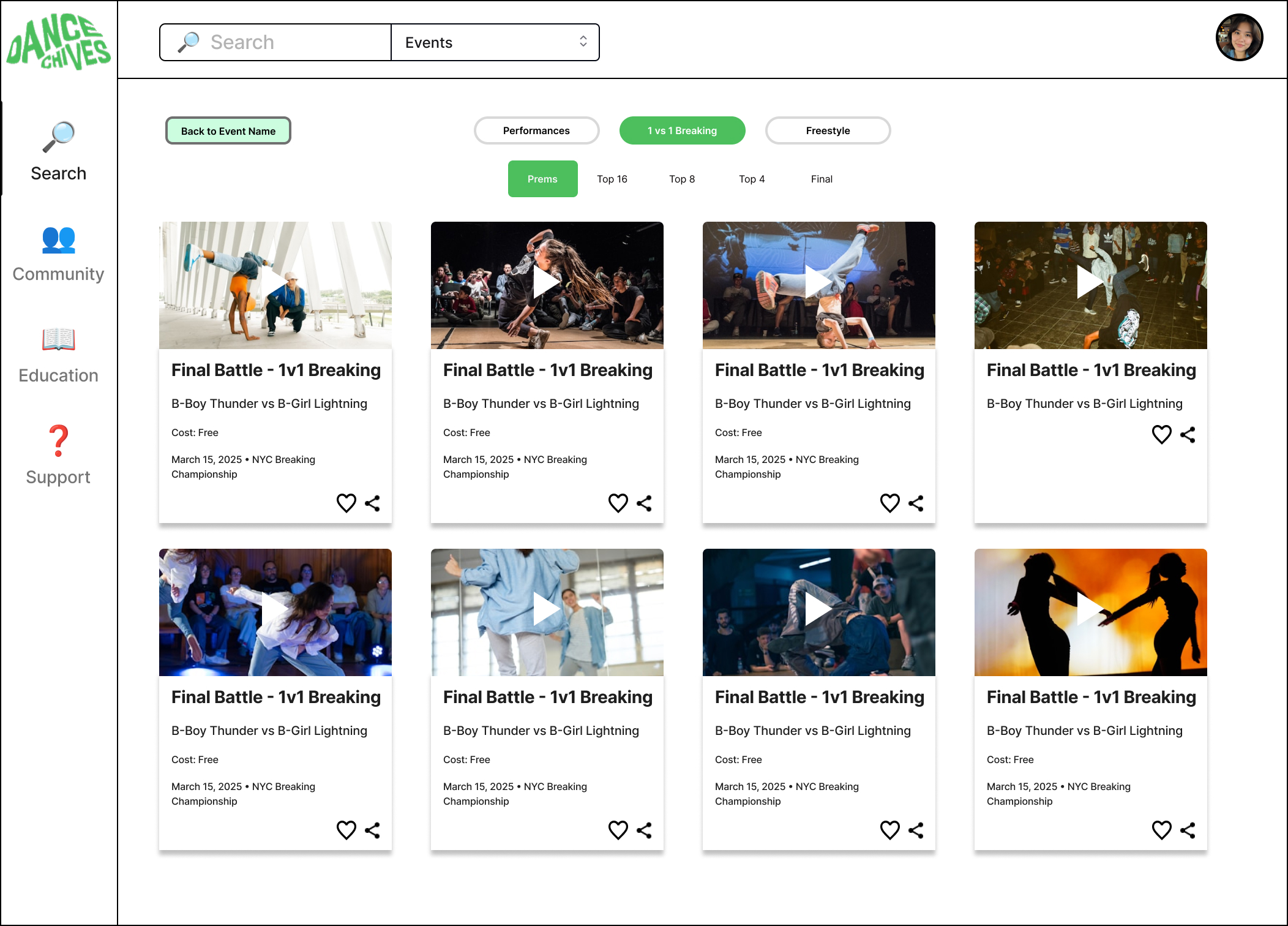
• Did not redesign everything from scratch to avoid confusing existing users
• Kept the interface simple instead of adding too many filters, even if it limited advanced control
• Focused on core features like search and structure first, instead of adding social or monetization features early
• Balanced depth of information with readability so pages do not feel overwhelming
If launched, Dance Chive could unify the dance community online, making it easy for fans and dancers to discover, explore, and celebrate events, while giving talent and organizers the recognition they deserve.
• Implement multi-language support
• Introduce monetization for promoted events
• Integrate mapping and class/practice session data
• Learned how to design features like bracket views, tagging, and search based on real user needs
• Gained experience structuring events, participants, and media in an intuitive, navigable way
• Learned how to work effectively with people from different backgrounds to create a cohesive product


.png)